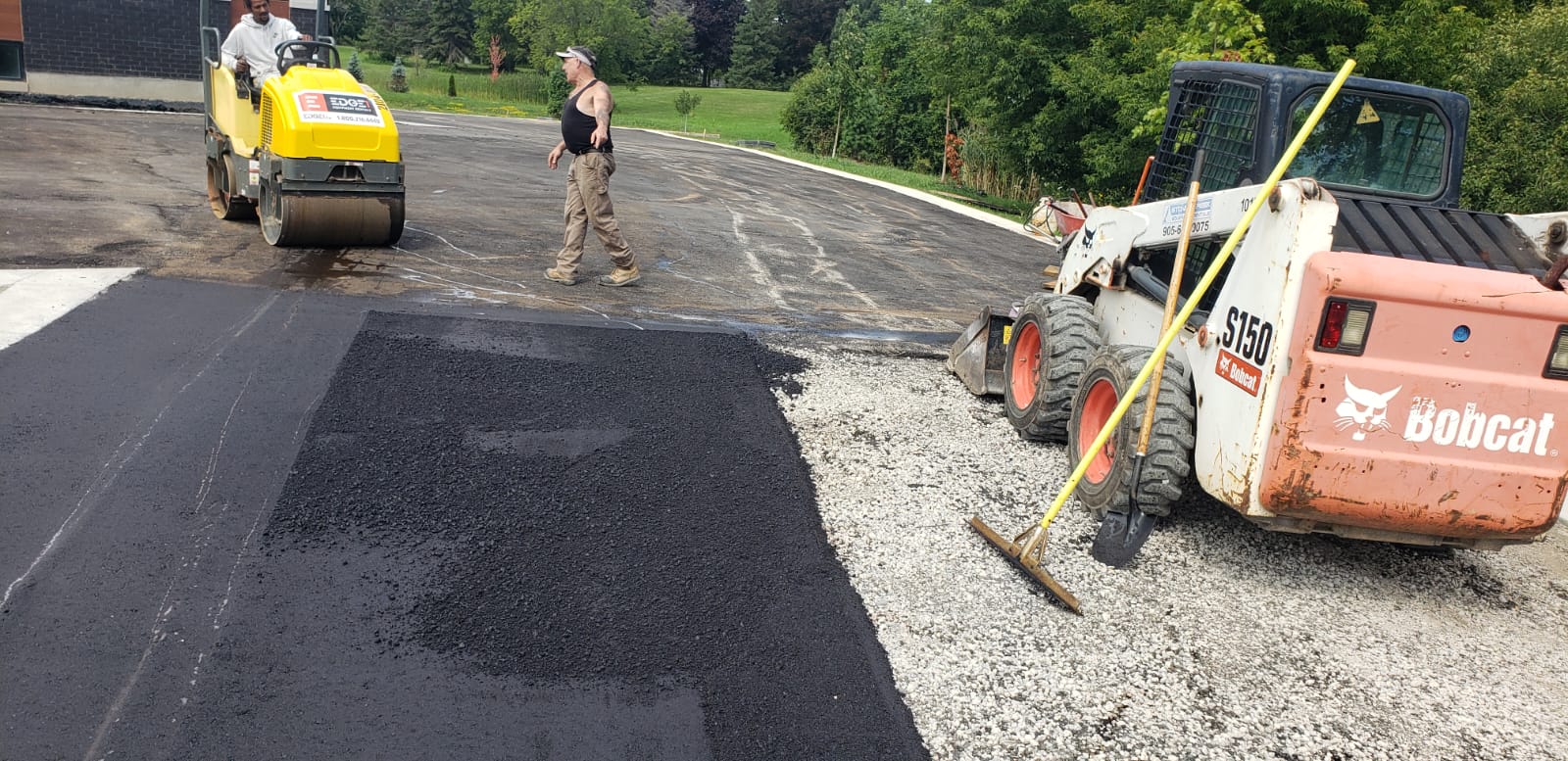
For property managers and business owners, a parking lot is a significant capital asset — and one that's easy to neglect until it becomes a serious problem. Cracked and potholed lots aren't just ugly; they're a liability risk, a tenant satisfaction issue, and a deterrent to customers. Understanding when and how to address pavement deterioration can save you thousands of dollars and years of headaches.
Signs Your Parking Lot Needs Attention
Not every deteriorated lot needs a full replacement. Here's how to read the warning signs:
Minor Issues — Act Now Before They Get Worse
- Surface cracks less than 1/4" wide — Seal them now. Water infiltration through cracks accelerates base failure.
- Faded line markings — Re-stripe before AODA compliance becomes an issue.
- Minor surface ravelling — A sealcoat can arrest this.
Moderate Issues — Repairs or Overlay
- Alligator cracking (fatigue cracking in an interconnected pattern) — Indicates base failure; needs cut-out and patch.
- Potholes — Patch immediately; they grow fast and create liability.
- Surface-level distress only — An asphalt overlay may be cost-effective if the base structure is sound.
Severe Issues — Full Replacement Required
- Widespread base failure — Waves, rutting, or depressed areas indicate the sub-base has failed.
- Multiple large potholes across the lot
- Pavement age 20+ years with no maintenance history
The Full Parking Lot Paving Process
When it's time for a new lot, here's what to expect from a reputable contractor:
-
1Site Assessment & Proposal A thorough site assessment evaluates existing pavement, drainage, soil, and traffic patterns. You should receive a written proposal with detailed specifications — not just a lump-sum number. If a contractor won't provide specs, walk away.
-
2Demolition & Removal Old pavement is milled or broken out and removed. On a large lot, this stage takes 1–3 days. Material is recycled — asphalt is 100% reprocessable.
-
3Subgrade & Drainage Work The native soil is shaped, weak areas are stabilized, and drainage is designed. This is the most expensive-to-fix stage if done wrong — ensure your contractor spends adequate time here.
-
4Granular Sub-Base Compaction Minimum 8 inches of compacted Granular A for commercial applications. Compaction is verified with testing — ask your contractor if density testing is included in the scope.
-
5Curb, Catch Basin & Utility Work Curbs, catch basins, and any utility adjustments are completed before paving. Skipping this sequence means expensive cut-outs after the fact.
-
6Asphalt Paving — Base + Surface Course Commercial lots receive a base course and surface course of hot-mix asphalt, totalling 4–5 inches compacted. High-traffic entry lanes may be built thicker.
-
7Compaction & Density Testing Steel drum rollers and pneumatic rollers compact the surface to 92–95% density. Nuclear density gauge testing confirms compliance.
-
8Line Painting After 24-hour cure, the lot is striped — stall lines, accessible stalls, fire lanes, arrows, stop bars, and any custom markings per your site plan.
Overlay vs. Full Replacement: Making the Call
An asphalt overlay (mill and fill, or direct overlay) costs roughly 30–50% less than a full replacement. It's the right choice when the existing base structure is sound but the surface is worn. Here's the decision framework:
- Choose overlay if: surface distress only, no base failure, drainage is adequate, 10+ years left on the base structure
- Choose full replacement if: base failure present, drainage problems exist, curbs need replacement, lot is 20+ years old
A reputable contractor will give you an honest assessment — not just recommend the more expensive option.
Pavement Maintenance Plan: Save Money Long-Term
The most cost-effective approach to parking lot ownership is a proactive maintenance plan:
- Year 0–1: New pavement — let it cure fully
- Year 1–2: Apply first sealcoat once fully cured; re-stripe
- Every 2–3 years: Sealcoat, crack fill, and re-stripe
- Year 10–15: Assess for mill-and-overlay
- Year 20–25: Full replacement if maintenance was consistent
A properly maintained lot can last 25–30 years. A neglected lot may need replacement in 12–15 years — at 2–3× the cost of consistent maintenance.
Ready to Assess Your Parking Lot?
We provide free commercial parking lot assessments across Hamilton, Burlington, Oakville, and surrounding areas. Contact us to schedule a site visit.
Get a Free Assessment Parking Lot Paving Service