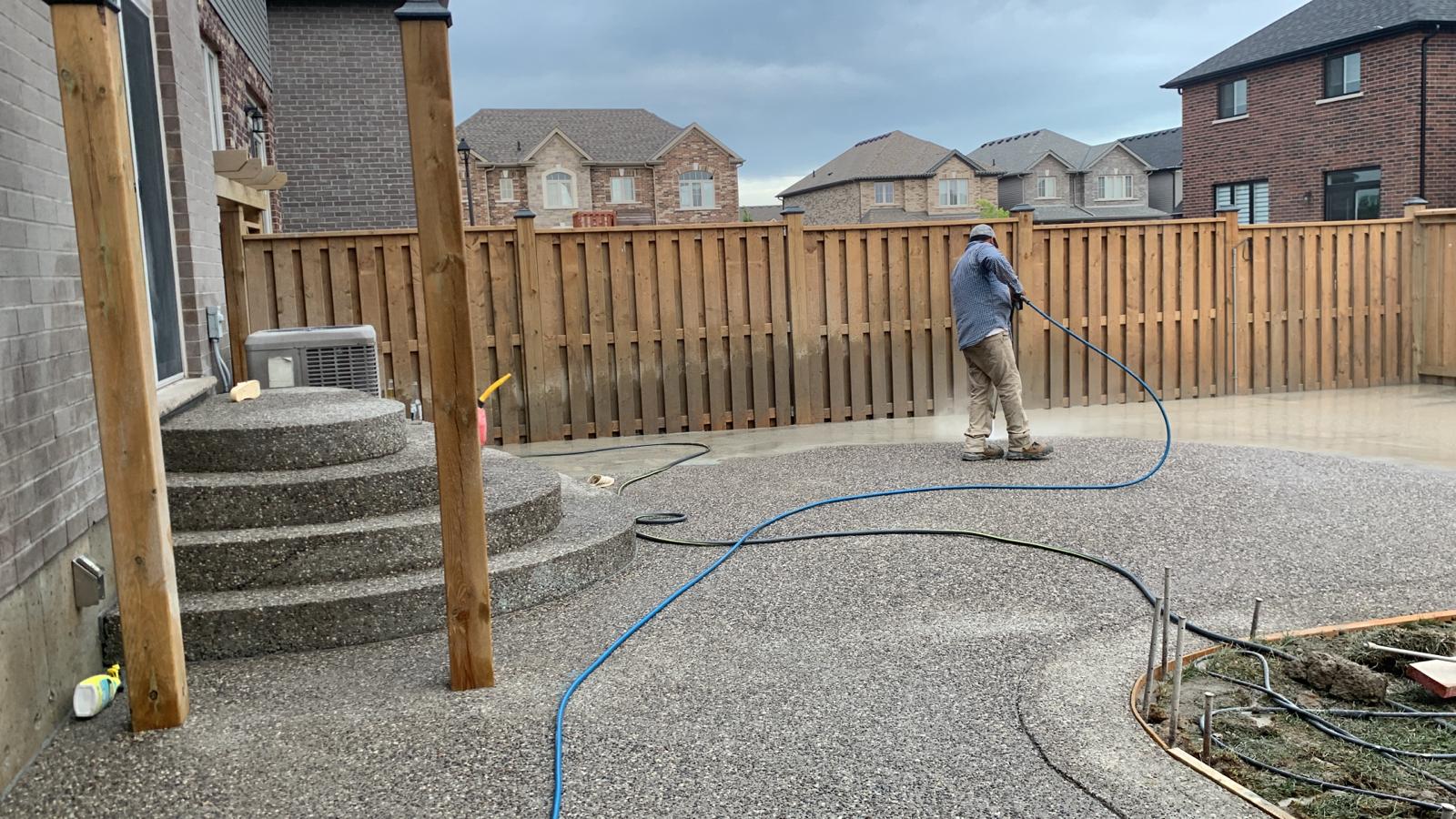
Concrete looks permanent — but over time, driveways, parking lots, garage floors, and patio surfaces accumulate years of motor oil drips, rust bleed, tire marks, algae, moss, and organic staining. These aren't just cosmetic problems. Oil contamination degrades concrete, and biological growth causes surface erosion. Professional pressure washing doesn't just clean — it restores the surface and extends its lifespan.
Here's what separates a professional concrete wash from a weekend DIY job — and what each type of stain actually requires to remove it properly.
Why Hot Water Changes Everything
Consumer pressure washers run cold water at 1,500–2,000 PSI. Professional equipment runs hot water (up to 200°F / 93°C) at 3,000–4,000 PSI. The difference is dramatic:
- Hot water breaks the molecular bond between oil/grease and the concrete pore surface
- Higher temperature kills biological growth (mold, algae, moss) on contact — rather than just displacing it
- Higher PSI + surface cleaners cover more area, faster, with uniform results
- Rotary surface cleaner attachments eliminate streaking common with hand wands
Types of Concrete Stains & How We Remove Them
Motor Oil & Grease Stains
Oil stains are the most common concrete problem and the most difficult to remove completely. Fresh oil (less than a few weeks old) can often be lifted with hot water and a degreaser. Old, set oil stains have penetrated the concrete pores and require:
- Absorbent compound or poultice to draw residual oil to the surface
- Professional-grade biodegradable degreaser applied and allowed to dwell 10–15 minutes
- Hot water surface cleaner at 3,500+ PSI to flush the emulsified oil out of the pores
- Second degreaser application for severe stains
Even professional treatment may not fully eliminate very old, deeply penetrated oil stains — but will dramatically reduce their appearance. Applying a concrete sealer afterward prevents future staining by sealing the pores.
Rust Stains
Rust stains come from rebar corrosion bleeding through the concrete, metal furniture, fertilizer, and iron-rich water sources. Pressure alone cannot remove rust — it requires a chemical approach:
- Professional oxalic acid-based or citric acid rust remover is applied to the stained area
- Product is allowed to dwell and chemically react with the iron oxide
- Surface is scrubbed with a stiff brush to agitate the reaction
- Thoroughly flushed with hot water at high pressure
- Process repeated for stubborn or deep stains
Important: Never use muriatic acid on concrete without professional guidance — it can damage the concrete surface and is hazardous to handle.
Organic Stains (Mold, Algae, Moss, Leaf Tannins)
Biological growth on concrete is a surface-erosion issue, not just cosmetic. Algae and moss produce acids that slowly etch the concrete. Our treatment:
- Apply biodegradable commercial-grade algaecide or sodium hypochlorite solution
- Dwell time of 5–10 minutes to kill biological matter at the root
- Hot water rotary surface cleaner to remove all dead growth
- Post-treatment application of growth-inhibiting sealer for long-term prevention
Concrete Restoration: Beyond Basic Washing
Some concrete surfaces have more than surface staining — they have surface erosion, spalling (flaking), or a heavily pitted texture from years of de-icing salt use. In these cases, pressure washing is combined with:
- Surface grinding / light scarifying to remove the damaged top layer
- Concrete sealer application to penetrate and consolidate the surface
- Crack repair with polyurethane or epoxy injection prior to sealing
The goal is to arrest further deterioration, improve appearance, and protect the concrete for years to come — without the cost of replacement.
Concrete Sealing After Washing: The Missing Step
Many property owners pressure wash their concrete and call it done. But a freshly cleaned and opened concrete surface is more susceptible to staining than before — the cleaning process opens the pores. Applying a penetrating concrete sealer within 24–48 hours of washing:
- Seals the pores against future oil and stain penetration
- Reduces moisture absorption and freeze-thaw damage
- Inhibits biological regrowth for 2–3 years
- Enhances the concrete's natural colour and sheen
We offer combined wash + seal packages that maximize value and ensure your concrete stays clean and protected longer.
How Often Should Concrete Be Professionally Washed?
- Driveways: Every 1–2 years, or when staining becomes visible
- Commercial parking lots: Annually — heavy traffic accelerates staining
- Patios & walkways: Every 1–3 years depending on tree coverage and use
- After winter: Spring washing removes salt residue that causes pitting and spalling
Ready to Restore Your Concrete?
Our professional hot-water pressure washing service is the most effective way to clean and restore concrete in Hamilton. Contact us for a free quote.
Get a Free Estimate Pressure Washing Service